Elmore City-Pernell High School students will have the opportunity to try out a new competitive sport this year as the district joins the growing number of Oklahoma high schools to add competitive video gaming, also known as esports, to their extracurricular activity lineup.
“It’s just another way for kids to get plugged into something they can have fun doing, and to help them develop skills that maybe they can earn a living off of one day,” said Stephen McCleskey, who will be heading up Elmore City-Pernell’s program.
Esports, especially in educational settings, has grown in popularity across the nation in recent years, not just because of its natural appeal to students but also as a sort of ‘trojan horse’ for STEM learning opportunities.
In Oklahoma, at least 15 colleges currently offer scholarships for esports, and in September 2021, the Oklahoma Secondary School Activities Association’s board of directors voted unanimously to make esports an OSSAAsanctioned sport.
ECP’s program will combine a classroom elective and an extracurricular video-game competition component.
“It’s not just playing video games during school hours. The focus is going to be developing soft skills, conversational skills, things like that,” McCleskey said.
The district will be using curriculum based on guidance from the North American Scholastic Esports Federation, which will include math, science, English, problem-solving and social-emotional learning components.
McCleskey said the classroom elective will include teaching in other areas such as content creation, catering to students who may be interested in the skill sets offered but may not want to play video games competitively.
“They may want to create content that isn’t video game related, it might be just life-related or conversation – podcasting – something like that. So, it’s going to be a really broad array of kids that will be in here, and a really broad array of things we’re going to be looking at in here, too,” McCleskey said. “They’ll also have the opportunity to stream someone else’s content. For instance, we could have a student operating the audio-visual computer and another student may be the streamer. So, they’ll be able to experience a producer-talent relationship during the content, during the stream, and work on those types of skills.”
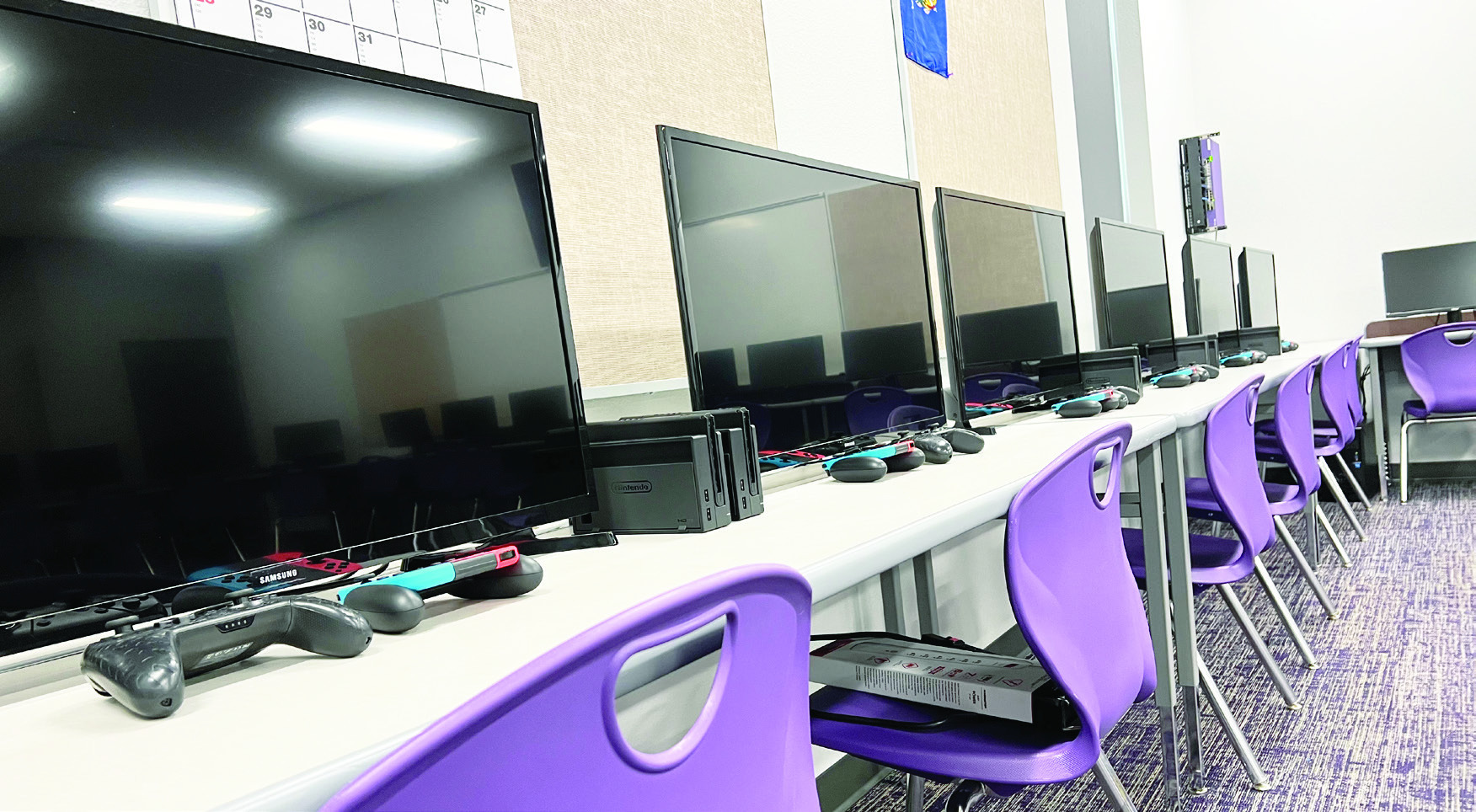
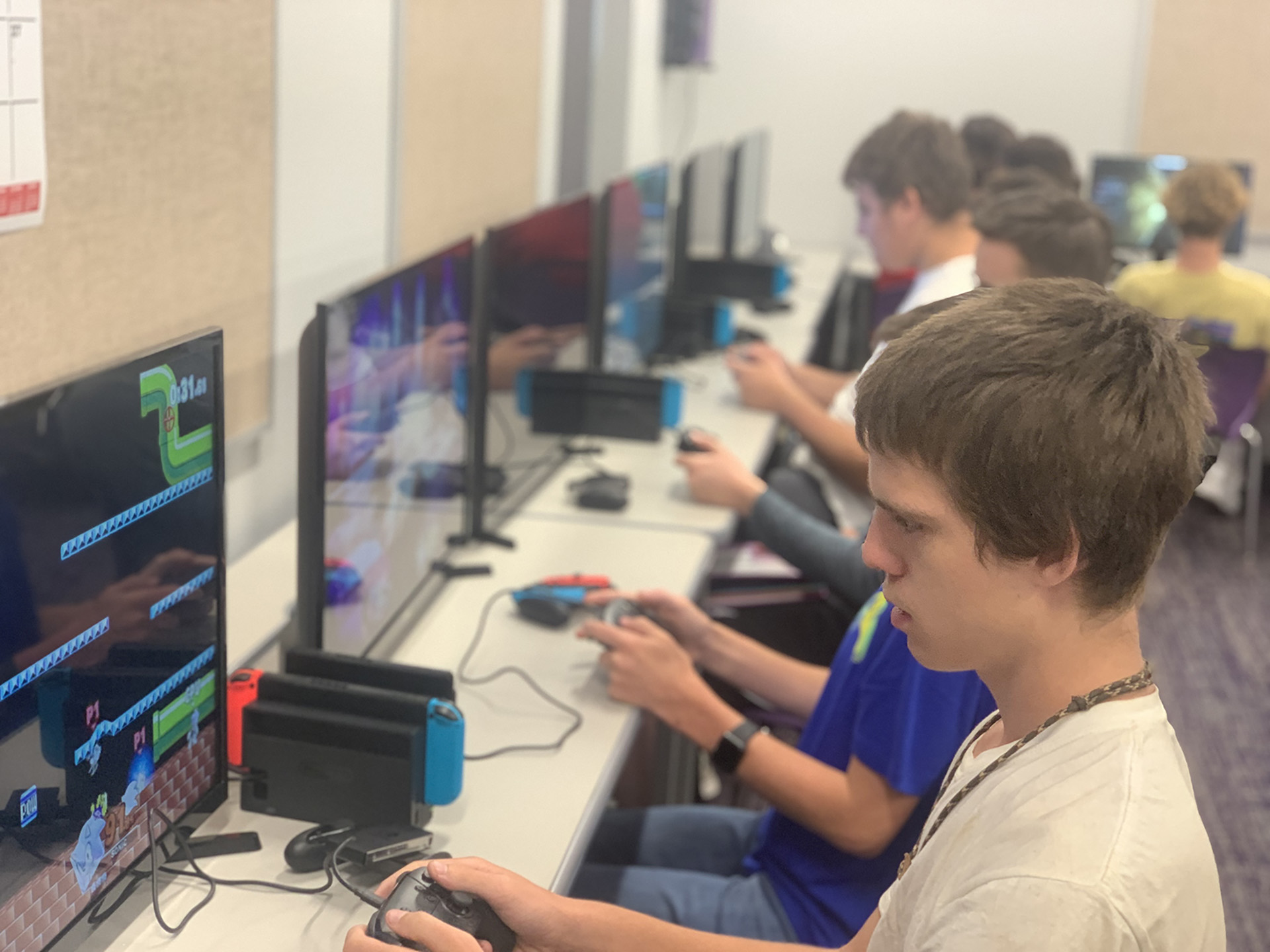
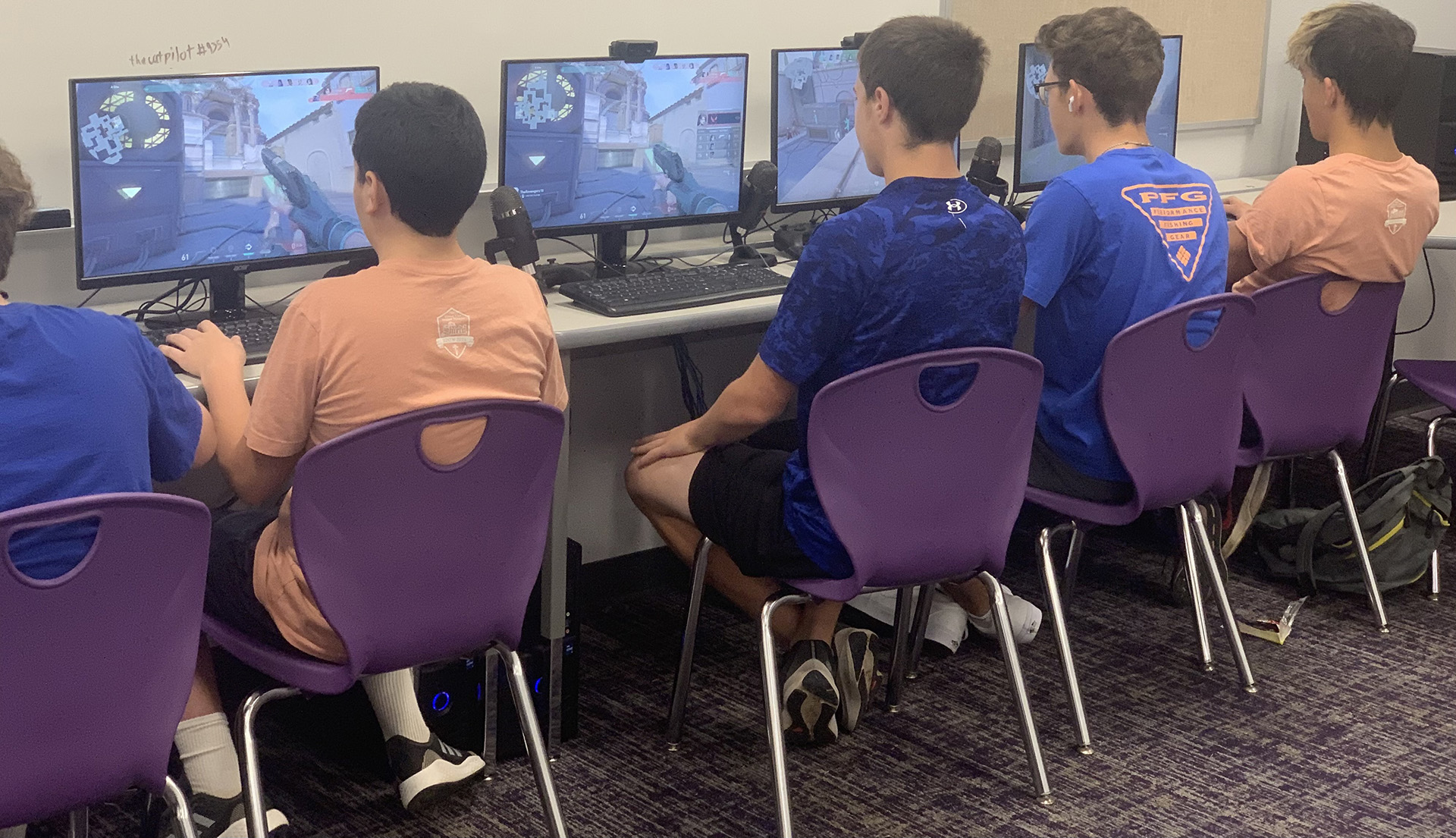
The class and competitions will take place in an esports lab at the high school, which was outfitted with a $40,000 Oklahoma Educational Technology Trust Grant the school was awarded in May. The grant allowed the district to invest in esports equipment including Nintendo Switch consoles with 32-inch monitors and gaming computers with monitors and webcams – one of which will be used primarily as an audio-visual component to broadcast the competitions when students compete.
The curriculum will feature a social-emotional component, which McCleskey said will address a variety of things, including how to lose gracefully.
“The social-emotional stuff is really geared toward situational awareness – this is how we lose gracefully; this is how we win gracefully – and dealing with emotions in a healthy way, instead of breaking controllers or punching TV’s. Breaking them free of that stuff and instead giving them a healthy outlet. Learning how to express disappointment but not outrage,” McCleskey said. “We don’t have a lot of that right now. It’s a lot of an outrage because this happened, instead of understanding a lot of things led to that, not necessarily winning or losing. That’s going to be the really big focus with the social-emotional learning. Just creating citizens, creating people that can be left to their own devices – no pun intended.”
McCleskey said there will be a screening process before students are allowed to enroll in the elective, primarily based on things like GPA and academic performance in other areas.
“It’s definitely intended to be an incentive,” McCleskey said. “You can be a part of this. We want you to be a part of this, but you have to take care of business with your core classes, too. Just like athletics and band have eligibility, this is our version of eligibility. You have to make your grades to get in.”
The district expects to have about 40 students from freshmen to seniors participating at the high school level this year, and a smaller group involved in a non-competitive “Introduction to eSports” class at the middle school.
“This first year we’re going to take more than we probably would any other year just to get the program started,” McCleskey said.
The feedback on the new course offering has been mainly positive feedback so far, according to McCleskey.
“The feedback from the kids, of course, has been positive. They’re excited about it,” McCleskey said. “And, honestly, a lot of the feedback I’ve gotten from adults has been pretty positive, too.”
All three ECP school sites have received OETT grants since 2016, which have been used for equipment such as iPads and Chromebooks. With those technologies in place, ECP High School Principal Angela Doss said she began brainstorming other things the district could invest in to go above and beyond just the basics.
She knew there were college scholarships available for students participating in esports and other high schools and colleges in the state were implementing esports programs.
She researched putting in an esports lab in 2021, but the cost to the district was just too high. When the OETT grant came up earlier this year, she thought it might be the perfect way to fund the program.
She connected with an administrator from John Rex Charter School in Oklahoma City, who had used an OETT grant to get an esports program off the ground. He shared what they had done and helped her get started.
“That was where I got a lot of my ideas as to how to make this work, because obviously I’m not a gamer or anything – but I am a grant writer!” Doss said.
“The biggest positive for me is that esports creates a niche for kids who may not fit in on the football field, or in band, or other activities. Elmore City is a small school, and we don’t have as many things to offer kids that have diverse interests. And there’s a group of kids that they really enjoy gaming, and this might be the difference in whether that kid ever goes to college or not, or stays enrolled in school,” Doss said. “Most people don’t realize the opportunities esports have to offer, or how beneficial it can be, especially to a certain group of kids.”