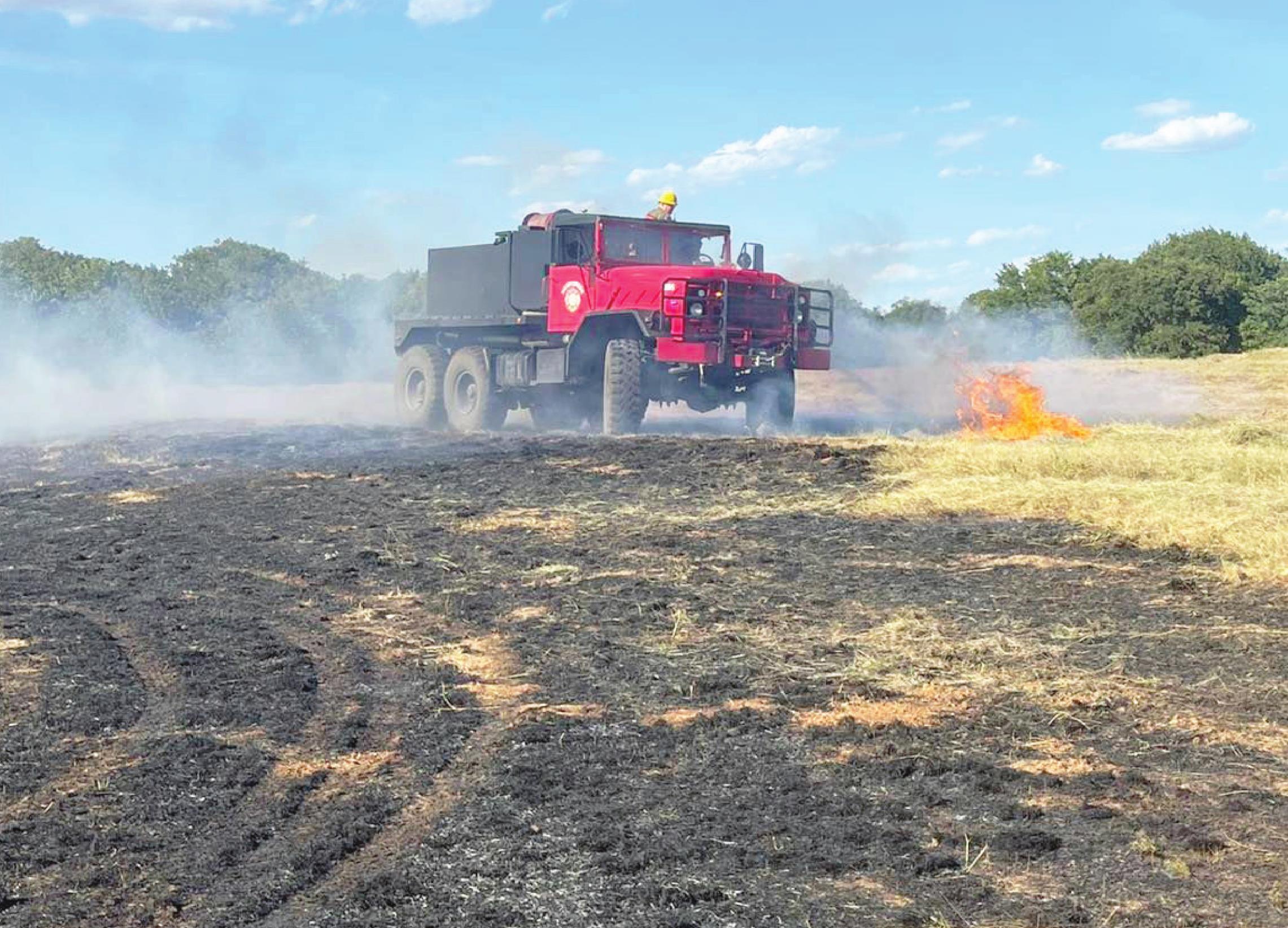
Garvin County is under a burn ban that prohibits all outdoor burning due to excessively dry conditions that are causing heightened fire danger across the area.
The Garvin County Board of Commissioners signed a resolution authorizing the 14-day burn ban, effective immediately, during an emergency meeting of the board July 21.
Garvin County Emergency Director Dave Johnson told commissioners he had spoken with fire chiefs around the county and all were in support of implementing a burn ban. Johnson said the county has seen an increase in grass fires over the last two weeks, with county fire departments battling six fires on July 19, when temperatures reached 110 degrees.
The excessive heat is causing grasses, brush and trees to dry quickly, providing an immense amount of fuel for fires, Johnson said.
“One of the challenges we’ve had, because it is so dry, the trees catch on fire. Once you have trees on fire, you have a greater chance of fires rekindling,” Johnson said, which requires more man-power and resources, as fire crews stay onsite to ensure fires remain extinguished.
Despite scattered rain showers across the county last week, county Mesonet sites have registered less than a quarter inch of rainfall in the last two weeks.
According to data released by the U.S. Drought Monitor on July 21, Garvin County is experiencing moderate to severe drought conditions.
Though rain is in the forecast for late this week, rain amounts across our area are only expected to be between a quarter to half an inch.
As of Monday morning, 41 Oklahoma counties had burn bans in effect.
The Garvin County Board of Commissioners have said they expect to re-evaluate the situation during the board’s Aug. 1 regular meeting and decide whether the burn ban will need to be extended for another 14-day period, or if conditions have improved enough for the ban to be lifted.
The burn ban prohibits “setting fire to any forest, grass range, crop or other wild lands” and outdoor burning, including campfires, bonfires and burning trash.
Gas grills and charcoal-fired cooking in a grill receptacle are permitted as long as the grill is on a non-flammable surface and at least five feet from flammable vegetation.
Penalties for violating the burn ban can include a fine of up to $500 and up to a year in jail.
The resolution also includes specific exceptions for using equipment related to welding, road construction projects and oilfield and landfill activities:
•Welders, grinders and cutting torches may be used over a non-combustible surface of at least 10 feet by 10 feet. When welding, blankets or screens must be used to cover flammable vegetation, wind speeds must be less than 20 mph, and an additional fire watcher must be posted at the site with pressurized water or a fire extinguisher.
•Road construction equipment using propane or another controlled-type burner is generally considered safe, but crews should have a water pumper on standby when equipment is used near a grassy right-of-way.
•Gas vents and flares associated with the extraction of oil and gas are considered exempt as long as the top of the vent pipe is raised well above the surrounding vegetation. Sludge pits should not be burned while the ban is in effect, and fire training exercises within confines of refinery boundaries are exempt from the ban.