Education funding is one of the most important responsibilities we have as state lawmakers as it makes a significant portion of the state budget. It is also one of the most complex responsibilities when it comes to understanding where the money comes from, how it gets to our local schools and, ultimately, who decides how it is spent.
Oklahoma public schools are funded through a combination of state, local and federal dollars. According to estimates from the National Education Association for the 2025-26 school year, about 46.4% of Oklahoma public school funding comes from state revenue, 44.7% comes from local revenue and 8.9% comes from federal funding streams.
At the state level, K-12 education for FY2027 accounted for more than $6 billion, which is an increase of $277 million over the previous fiscal year. Since 2018, when I was first elected to the Legislature, annual public education funding has increased by more than $2 billion.
This year’s budget included funding for a $2,000 teacher pay raise, increased health insurance benefits for educators and nearly $10 million for literacy and teacher reading initiatives.
It might be surprising to learn that state funding dollars for education does not all come from one place. School districts receive revenue from several state sources, including legislative appropriations, with nearly half of the state’s appropriated budget dedicated to public education.
But other state funding streams could come from: gaming revenue by the Oklahoma Gaming Compliance; lottery proceeds in accordance with the Oklahoma Education Lottery Trust Fund; motor vehicle collections according to the Oklahoma Vehicle License and Registration Act; rural electric cooperative taxes on rural electric installations within the school district; and earnings from state school lands on the basis of average daily attendance of the school district.
The Commissioners of the Land Office is another important source of funding for Oklahoma public schools. The agency made a record distribution of $160 million to 507 K-12 public school districts and 13 higher education institutions for FY27.
At the local level, school districts also receive funding generated within their communities. A significant portion comes from property taxes, including ad valorem taxes assessed on real, personal and public service property within a school district. Schools also receive revenue through the county four-mill levy, which is collected at the county level and distributed among school districts based on average daily attendance.
Generally, public schools receive the largest share of local property tax revenue, and this is a significant piece of the funding puzzle. In Purcell, for example, 33.2% of local tax dollars go toward public education, with the district spending around $10,000 per student on operations.
While the Legislature decides how much money to give local school districts, its local school boards that decide how the school districts spend their money. An example of this is school bonds. This is where school boards ask its citizens to vote and approve bonds for major capital needs, such as constructing or renovating buildings or buying equipment.
The Legislature may specifically earmark funding for a particular purpose, such as the $50 million that was appropriated this year for school security. School boards determine how best to use the money for security needs, such as cameras, metal detectors or school resource officers. When funding is not restricted for a specific purpose, local school boards and administrators decide how those dollars are spent based on the needs and priorities of their districts.
The final funding stream comes from the federal government. Federal dollars support specific programs and student populations rather than serving as unrestricted funding for school districts.
Examples include funding provided through the Every Student Succeeds Act that supports students from disadvantaged backgrounds, as well as federal funding dedicated to ensuring students with disabilities receive the educational services they need.
Federal dollars make up a smaller portion of overall public school funding in Oklahoma, and they could make up less and less each upcoming year.
The last important piece in understanding school funding is the State Aid Formula. This is how state funding is distributed among school districts and is based on factors such as enrollment, student needs and locally generated revenue. The formula takes into account the differences among districts, particularly because some communities can generate significantly more local revenue than others.
Understanding this formula, along with the other funding streams, is important because public education funding does not come from a single source. When we look at the full picture, we can see that Oklahoma makes a significant investment in our public schools, to ensure they have the funding they need to be successful.
I hope the school year is going great for everyone so far, as we soon will have our first parent teacher meetings. If you all have any questions or concerns, please reach out to my office.
You can email me at cynthia.roe@okhouse.gov, or you can call my office at (405) 557-7365.
Thank you for letting me be your voice at the Capitol!
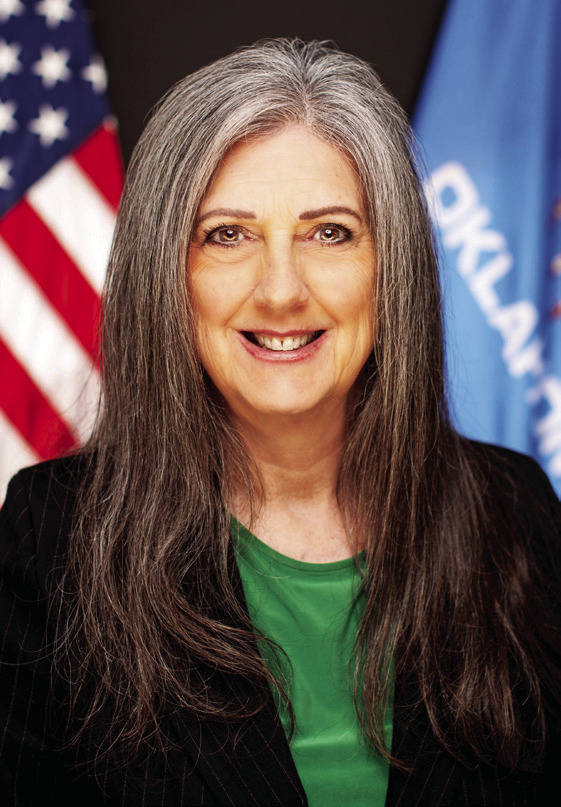
Rep. Cynthia Roe, a Republican, represents House District 42 in the Oklahoma House of Representatives. Her district includes portions of Cleveland, Garvin and McClain counties.