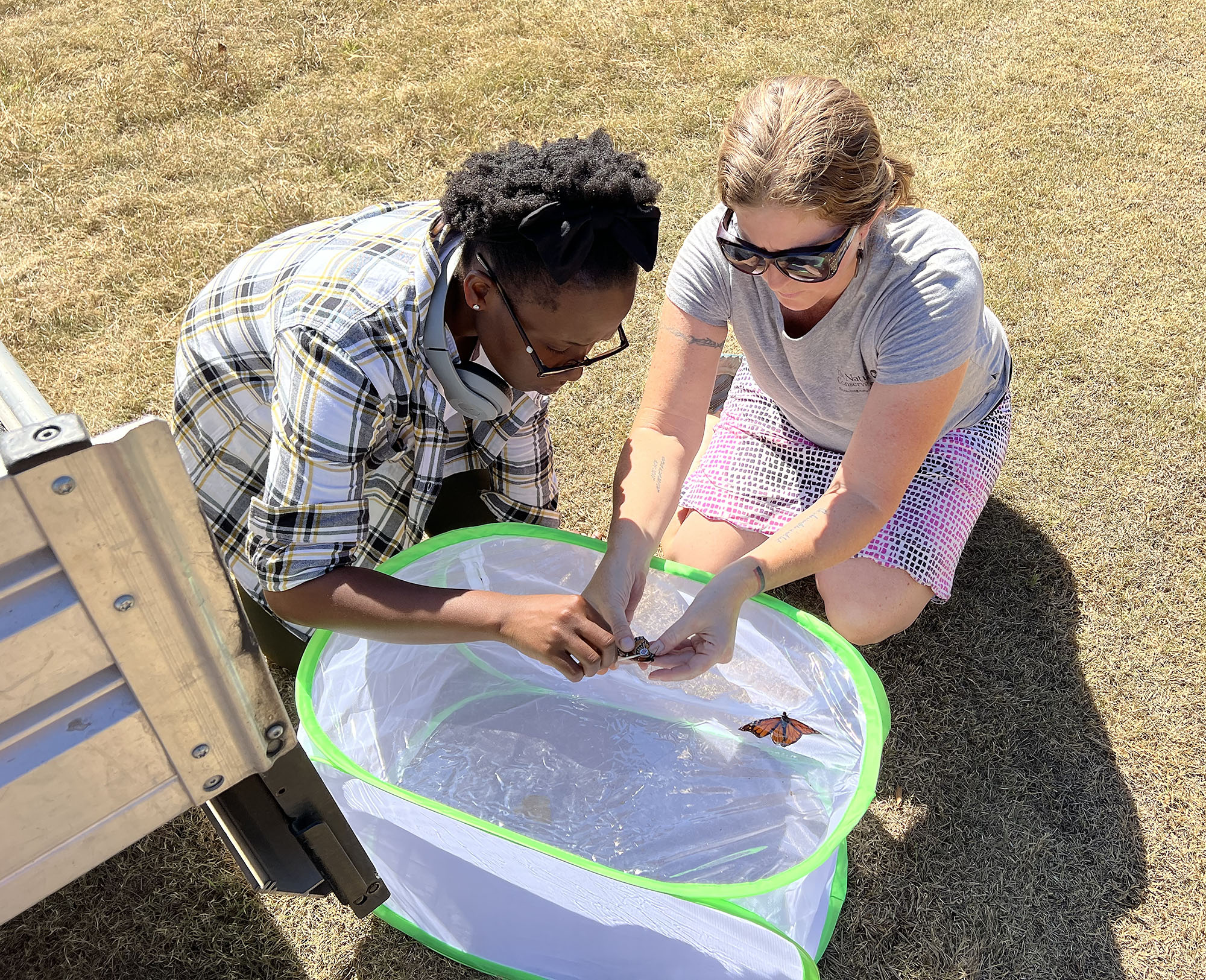
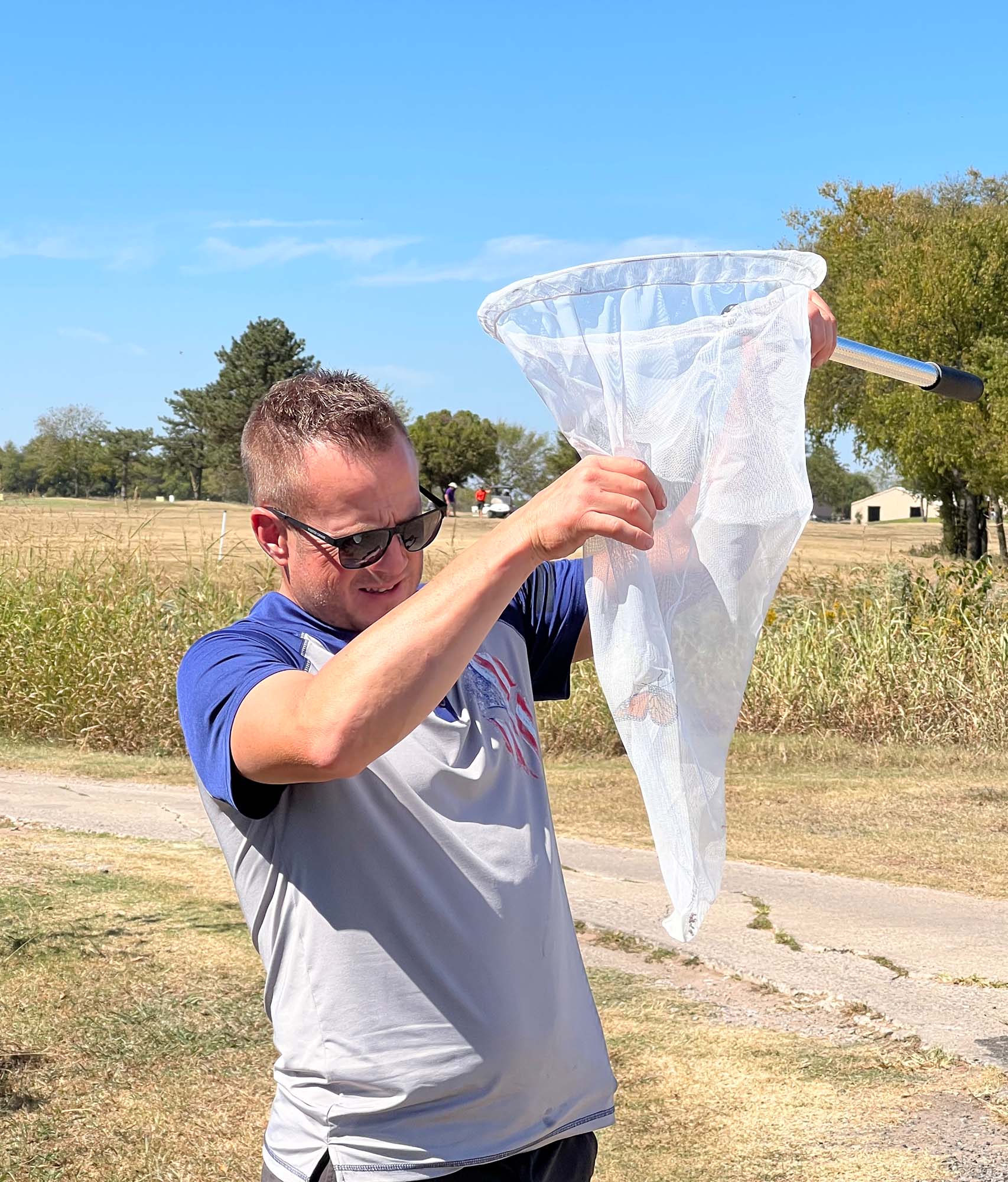
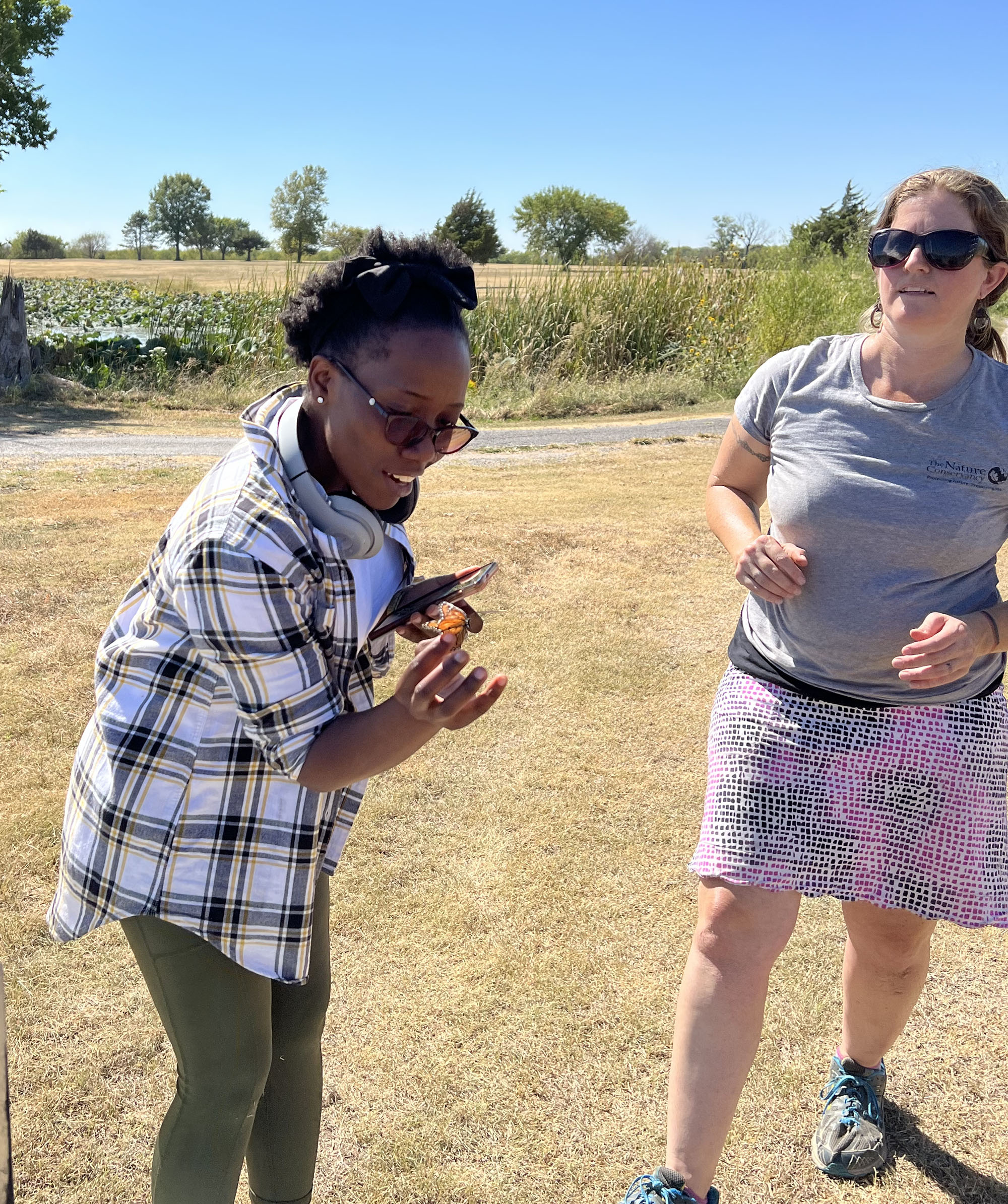
As local golfers enjoyed a leisurely afternoon on the greens at Pauls Valley’s Municipal Golf Course Saturday, a small group of volunteers were busy searching the golf course for migrating monarch butterflies to tag.
“I got one!” Golf Course General Manager Dean Browning called, holding up the butterfly net as he returned to the main group.
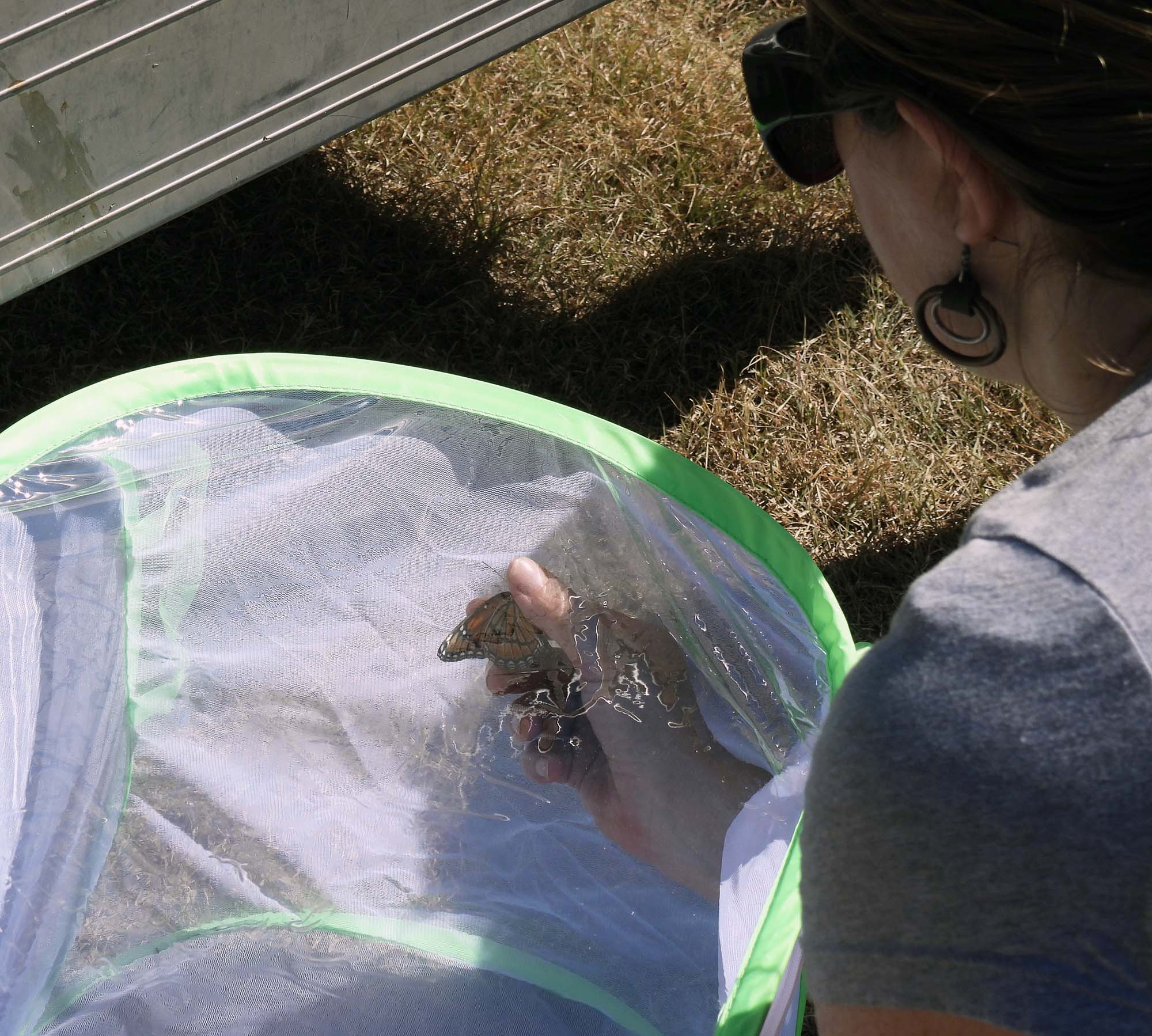
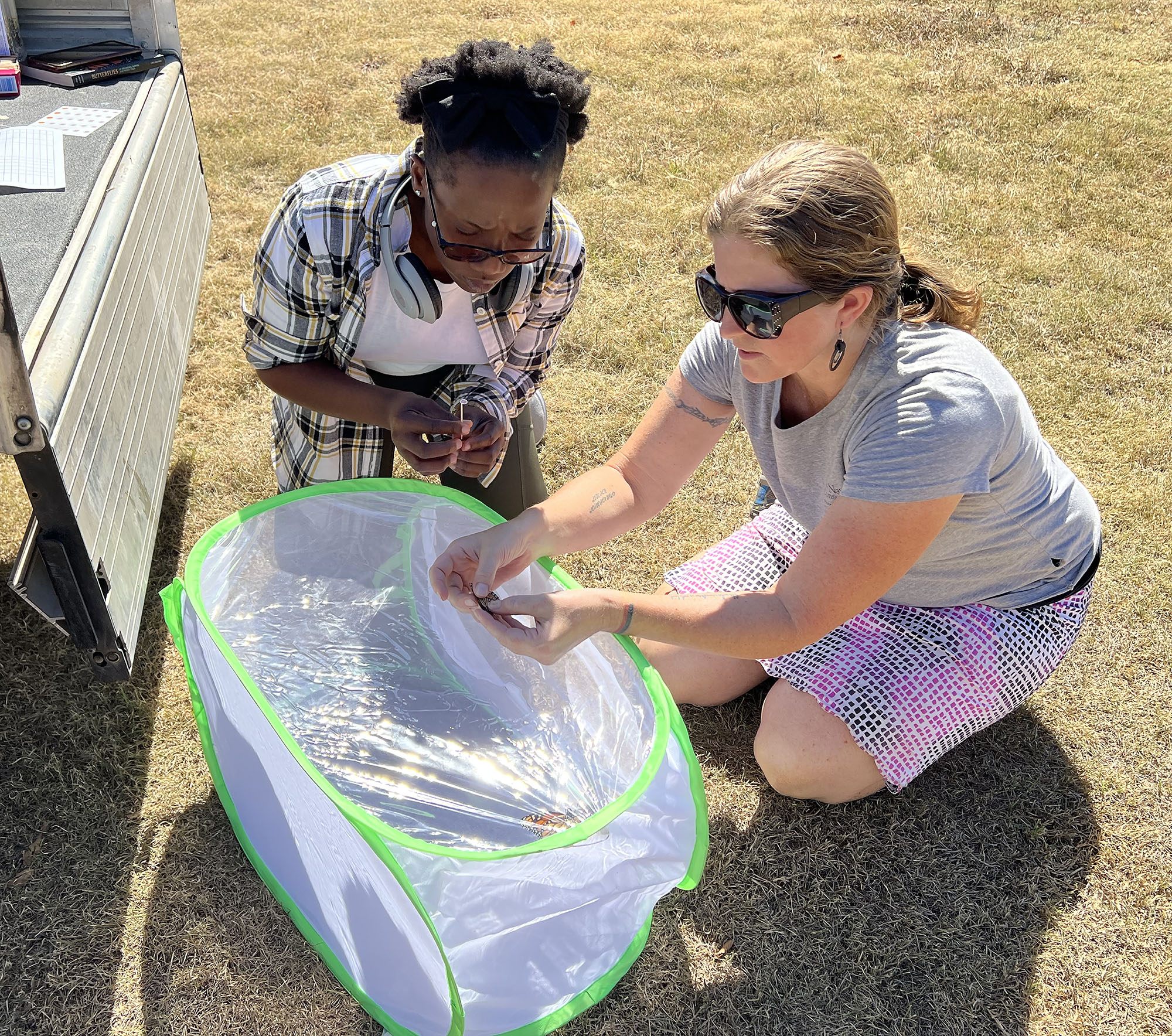
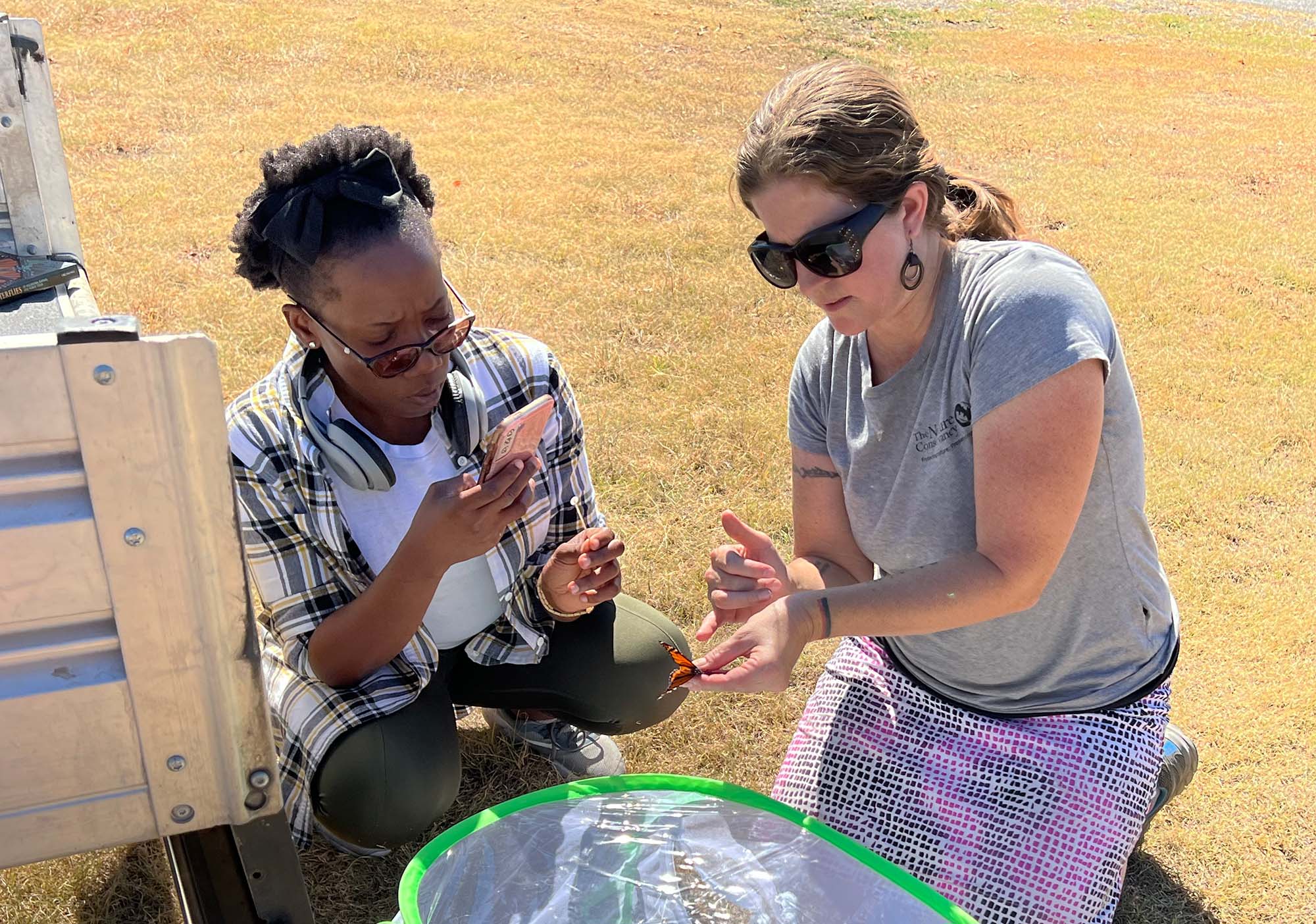
Kimberly Elkin, board chair for The Watershed Movement, a non-profit organization based in Ada, carefully added the monarch to a butterfly habitat enclosure, while she logged a tag number and other necessary information on a form to be submitted to Monarch Watch, a research group at the University of Kansas that focuses on the monarch butterfly, its habitat, and its spectacular fall migration.
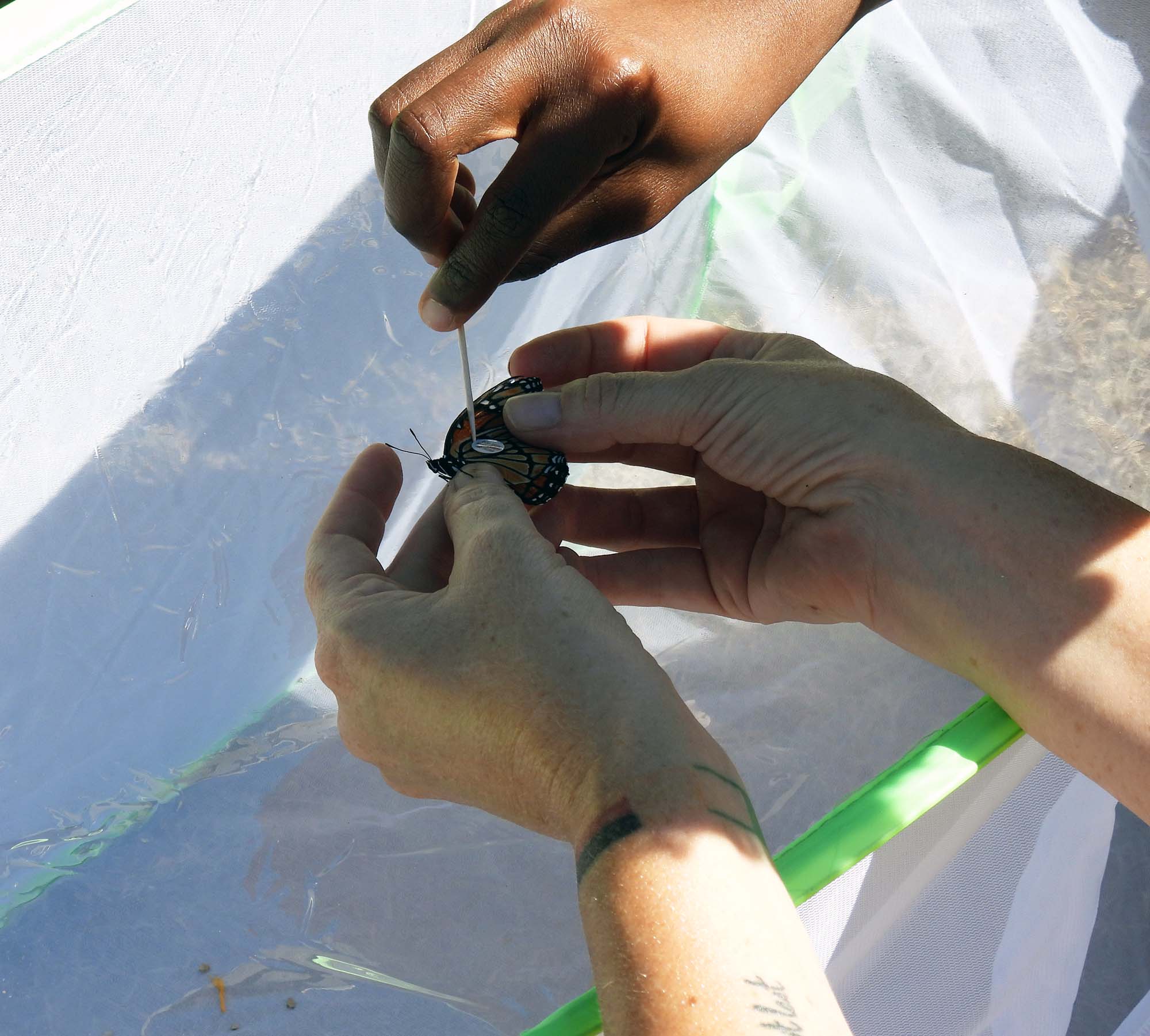
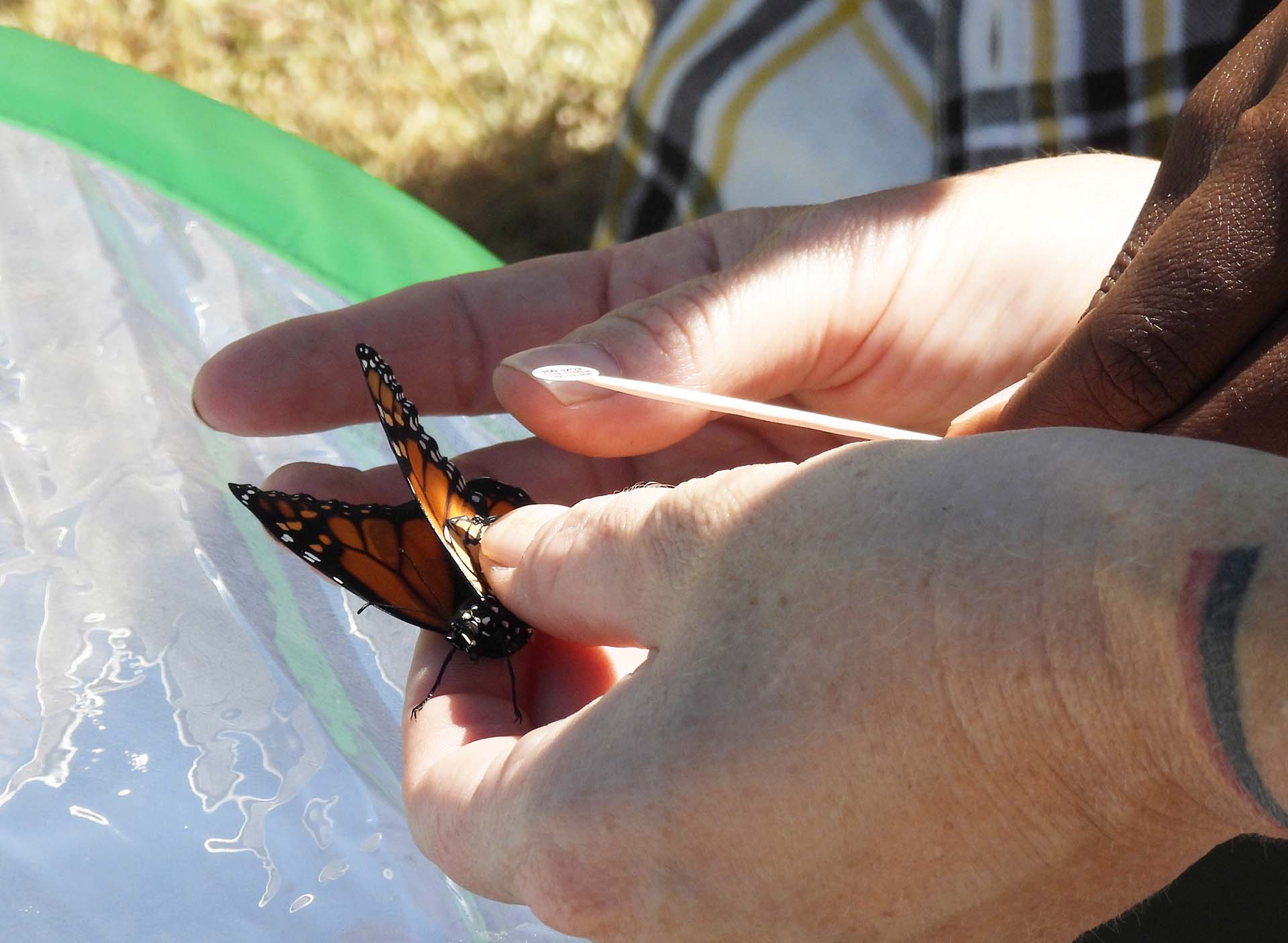
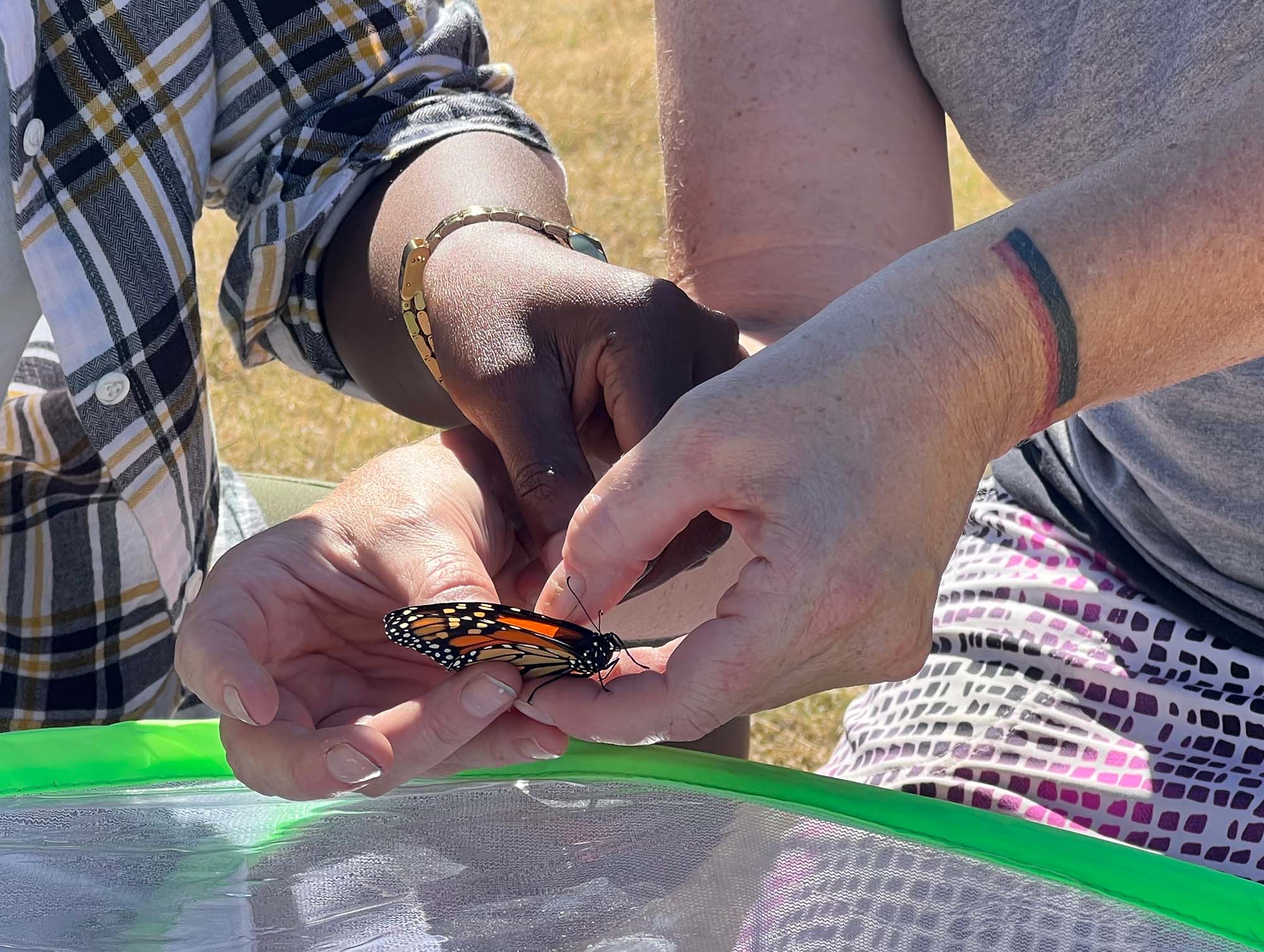
Elkin then held the monarch gently but firmly between her thumb and forefinger along the butterfly’s body, while Pauline Ngongang, an intern with The Watershed Movement, used a toothpick to carefully place a small, numbered sticker at a specific spot on the underside of the butterfly’s wing, close to the center of lift and gravity for the butterfly. When placed properly, the tags do not interfere with flight or otherwise harm the butterfly.
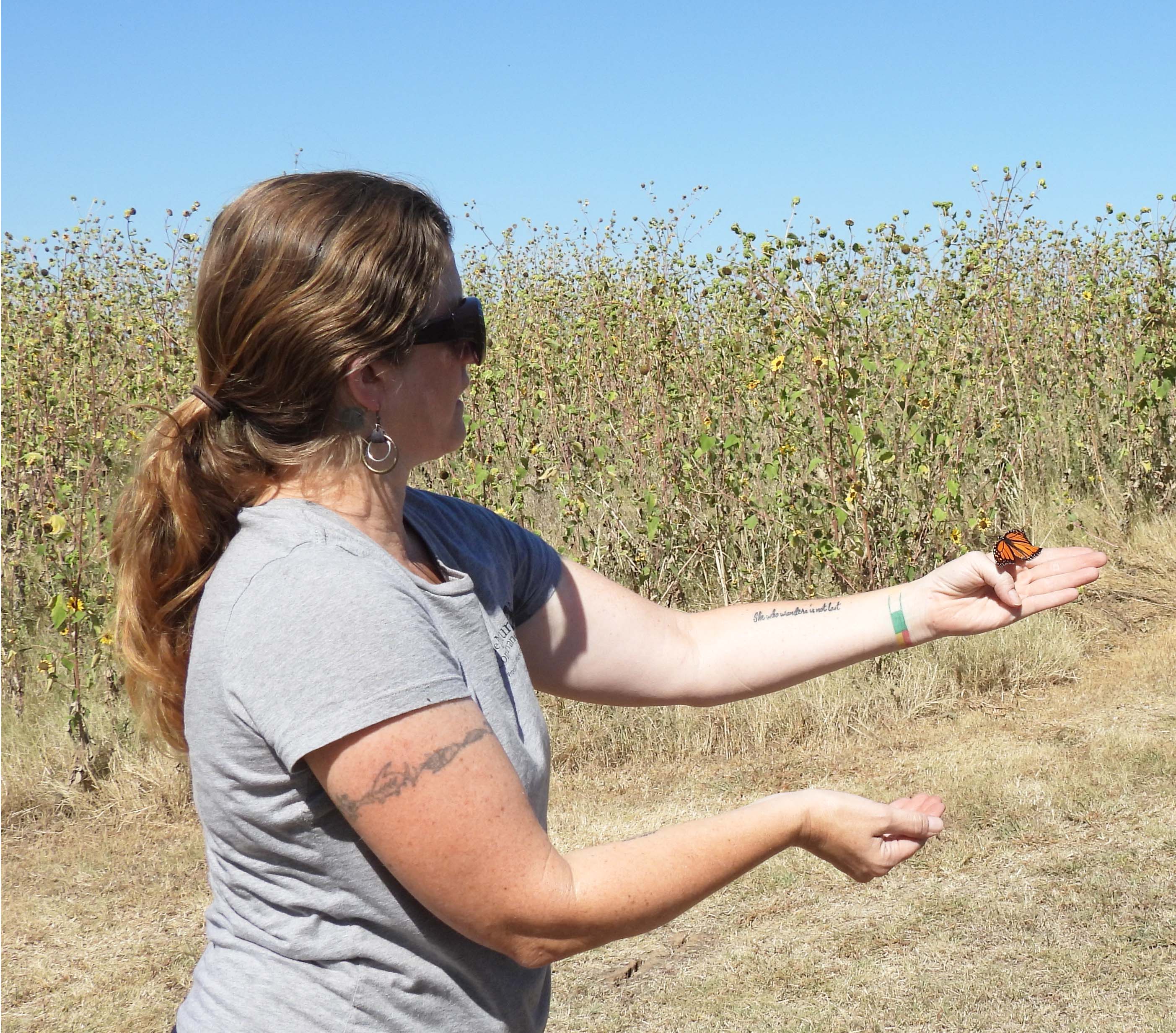
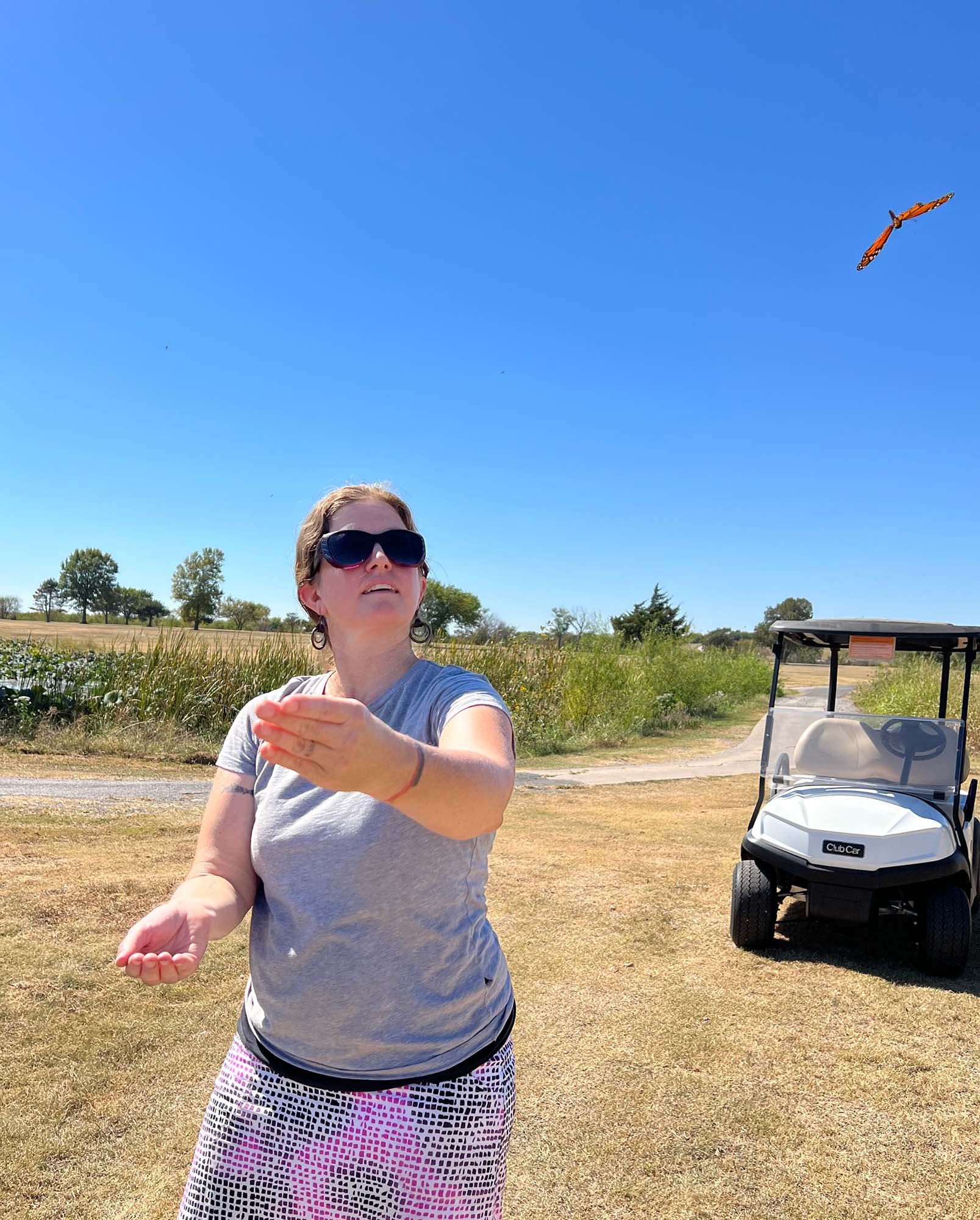
Once the tag was securely fastened, Elkin carefully handed the monarch to Ngongang so she could release it and it could be back on its way.
The Monarch Watch Tagging Program is a largescale community science project that was initiated in 1992 to help understand the dynamics of the monarch's fall migration, in which the butterflies travel south from Canada and the northeastern United States to central Mexico to overwinter. The migration usually brings the butterflies across Oklahoma in September and early October each year. The peak migration range for Garvin County this year is Sept. 24 to Oct. 6.
The migration progresses at a pace of 25-30 miles per day, although individual butterflies often fly further during periods when conditions are favorable.
At the Pauls Valley Golf Course, tagging the monarch butterflies is part of a larger project the golf course and The Watershed Movement embarked on earlier this year to plant pollinator-friendly native plants, while also helping the local watershed.
Elkin is a founding member of The Watershed Movement, which was established to inspire and educate people to care for watersheds and to create projects that benefit watersheds. Watersheds are any area where water drains or runs off into a particular body of water.
Browning said Elkin, who is also a member at the golf course, approached him late last year about partnering with the nonprofit to establish native plant pollinator gardens. Browning said he jumped at the chance.
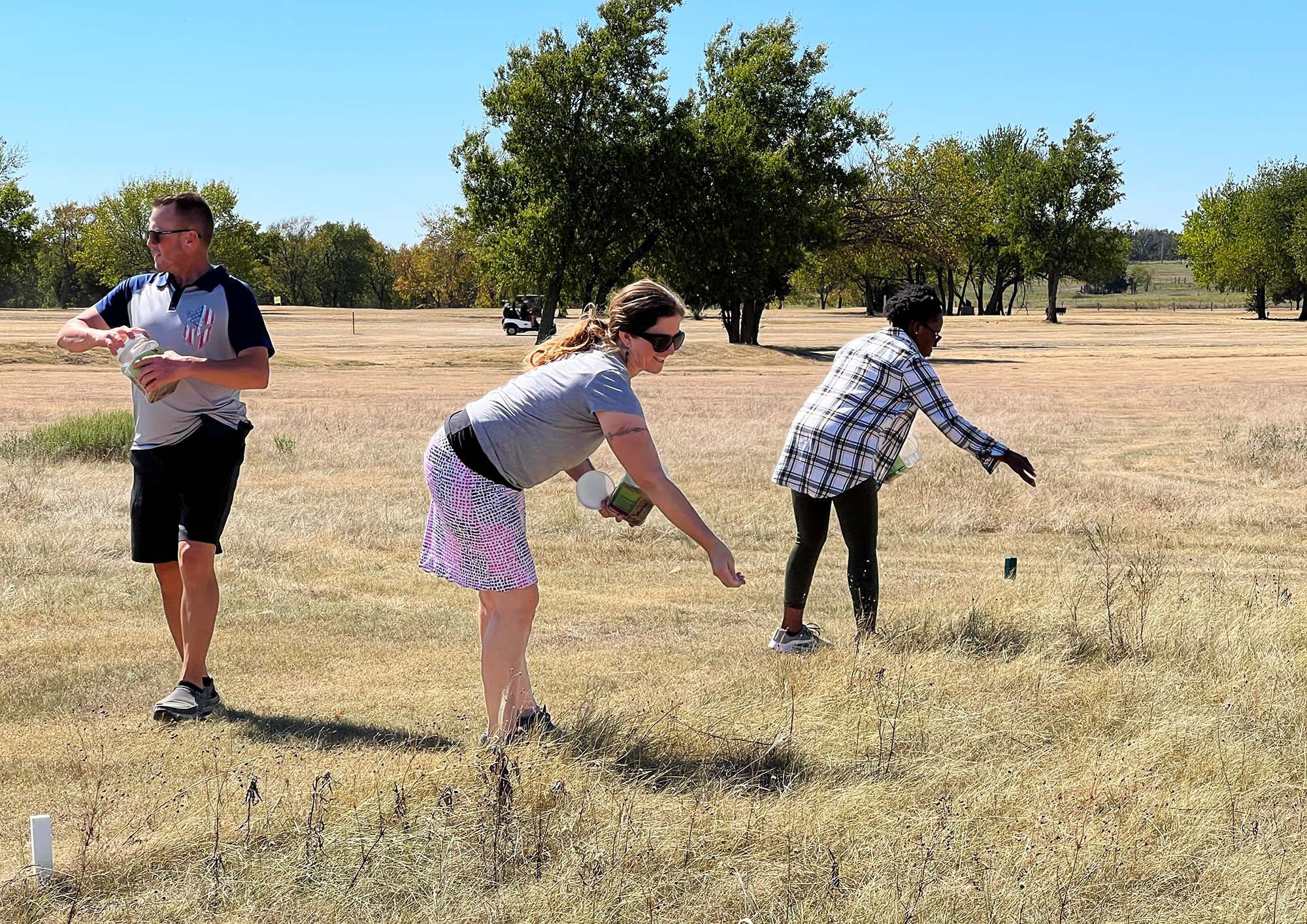
In March, the group completed phase one of the project, which included seeding 10, 30-foot-by-10-foot beds with pollinator friendly native plants and wildflowers. Those plots are spread all across the golf course.
In May, they moved to phase two, planting flats of native plants around the course and clubhouse.
The summer heat and extreme drought conditions have caused many of the plantings to fade, Browning said, but because they are native plants, he said he expects they will bounce back once there is a little rainfall.
During Saturday’s excursion, volunteers also worked to reseed the pollinator beds for the fall season.
Browning said the project offers the opportunity to beautify and add visual interest to the golf course, while at the same time creating a healthy ecological environment for pollinators, including monarchs.
The project has earned the golf course recognition as a certified monarch waystation through Monarch Watch.
The native plants in the pollinator gardens also benefit the watershed because they tend to have deeper root systems, which increase the soil’s capacity to store water. As a result, native plants can reduce flooding and polluted stormwater runoff, improving water quality in the watershed.
Elkin and Browning said they are also in the process of raising funds to purchase wind or solar powered aerators to oxygenate the ponds at the golf course, an addition that would keep the ponds healthier and cleaner and benefit plant and animal life in and around the ponds.