Editor’s Note: State Rep. Cindy Roe hosted a Marijuana Town Hall in Pauls Valley on Dec. 16. During the two-hour meeting citizens heard from state and local law enforcement, the executive director of OMMA and state legislators. This is the second article in a multi-part series covering the information, concerns and solutions presented there. The rest of the series can be found here: 'A perfect storm': State sees surge of criminal organizations linked to illegal marijuana operations, and Balancing act: promoting legal industry while eradicating black market marijuana.
When Adria Berry was named executive director of the Oklahoma Medical Marijuana Authority last August, she stepped into the daunting role of heading up an agency that had become one of the fastest growing medical marijuana authorities in the country, serving more than 375,000 patients and over 12,000 businesses.
As OMMA’s fourth director in just three and a half years, Berry was tasked by Gov. Kevin Stitt to refocus the agency which has struggled to keep up with the demands of regulating the state’s new medical marijuana industry.
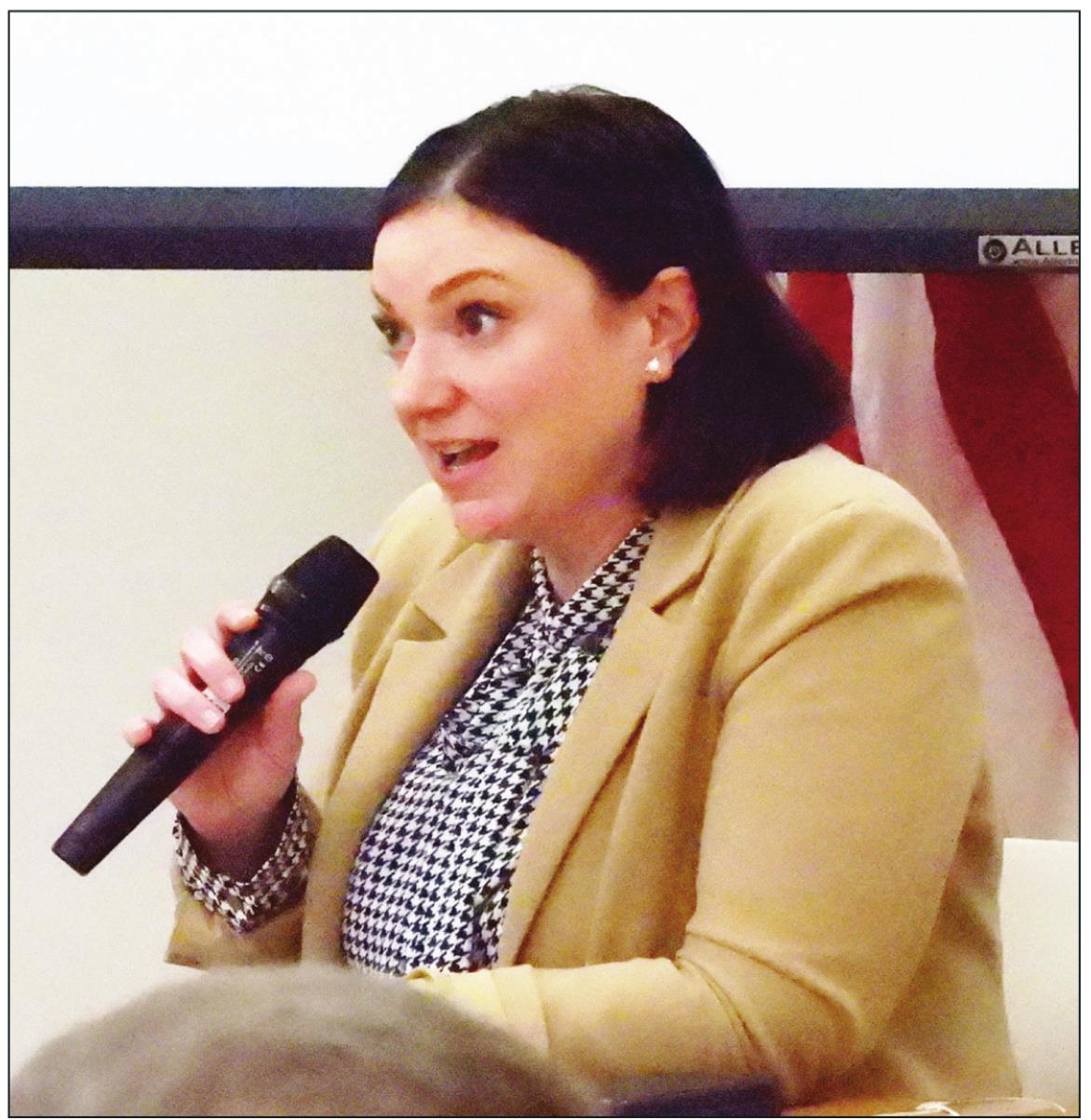
Berry attended a Marijuana Town Hall hosted by Rep. Cindy Roe in Pauls Valley last month, to hear concerns and comments from local residents regarding the medical marijuana industry and to give some insight into changes being made at OMMA under her leadership.
“When I came in at the end of August, I took a step back and looked at everything we had done at OMMA and looked at the things we hadn’t done. My message to you is that I will never make excuses for the lack of enforcement that was going on at OMMA,” Berry said. “We weren’t out enforcing our rules and regulations. There’s really no excuse for it. However, we’re absolutely changing trajectory, and we’re turning it around pretty quickly.”
While not making excuses, Berry did offer some explanation, saying many of OMMA’s deficiencies in the last three years can be traced back to the passage of State Question 788, which legalized medical marijuana, in June of 2018 and the unrealistic expectations written into the initiative petition. Those included a requirement that the state health department, which now oversees OMMA, establish a state agency and begin issuing medical marijuana licenses within 60 days.
“That is an incredibly, unreasonably, short turnaround,” Berry said. Because of the short timeframe OMMA was created on a shoestring budget, with only basic staffing.
“That created just a sense of constant chaos. There was never any stopping to be proactive and catch their breath and ask, ‘What could we be doing to get ahead of these problems?’” Berry said. “Instead, it was always just making sure they issued licenses within the statutory required time.”
The result, according to Berry, was an agency with a really good licensing department, but a compliance department that was virtually ignored.
“We didn’t have our eyes across the state like we should have, and like we were required to by statutory mandate,” Berry said.
Compliance inspections of licensed marijuana businesses is high on Berry’s list of trajectory adjustments. Since Berry took over at the end of August, OMMA has doubled its compliance staff, and those staff are receiving enhanced training.
When OMMA’s compliance officers go out to inspect businesses, one of the first things they check is whether facility has an OBN license. If it doesn’t, Berry said, that’s an easy call of incompliance. They also check to make sure the facility is in compliance with major laws, health and safety, and working conditions.
“We’ve had inspectors, recently, have guns pulled on them and been told they cannot come on the property,” Berry said.
To combat that and ensure the safety of its staff, OMMA has now hired investigators, all retired law enforcement officers, who are tasked with accompanying compliance inspectors when they are going to facilities that they know are not safe.
Berry said OMMA’s compliance unit is also working with local law enforcement across the state to build relationships and to educate law enforcement on things such as what various licenses look like and what paperwork is required in a particular situation.
“Our goal and our focus, our mandate by law, is to be the regulatory agency over the medical marijuana industry,” Berry said, adding that SQ 788 created a whole new industry in the state basically overnight. She said she believes many of the problems that have arisen on the regulatory side of the industry are growing pains as people scramble for their market share.
“It is going to work itself out, but it is going to take a little time. With us being out with a full staff, present in the state, it will help turn the tides on this. I think within the next year we’re going to see a different environment,” Berry said.
OMMA is also working with law enforcement agencies like the Oklahoma Bureau of Narcotics and Dangerous Drugs to eliminate criminal organizations that are exploiting Oklahoma’s medical marijuana laws to grow illegal product for black market sales.
A seed-to-sale tracking system that tracks products from when the seed is planted to when it’s sold is a critical piece of that effort, according to Berry, who said most other states with legalized marijuana programs have some sort of tracking system to ensure products are grown, processed, transported and sold legally.
The implementation of Oklahoma’s seed-to sale system is a part of House Bill 2612, also known as the “unity bill,” which was passed by the legislature in 2019. The system was set to take effect in April 2021 but has been held up as part of a lawsuit filed by businesses who say the state shouldn’t be able to require them to purchase the tags needed to track marijuana products. The next hearing in the case is set for February.
“We don’t have that in place right now, we don’t have an electronic system that’s tracking every plant as it moves through the system in Oklahoma,” Berry said.
With tools like seedto-sale tracking in place, OMMA’s fully staffed inspection unit, and a new 40-person marijuana enforcement unit in the works by OBN, Berry said she thinks things should begin to level out, both on the regulatory side and the criminal front.
“Once those things all come together at once, it really is going to change the entire landscape of this industry and of what you’re seeing out in the real world all across Oklahoma,” Berry said.
OMMA is also working with OBN to track down business licenses that were issued to companies with a “ghost-ownership” setup – businesses who have skirted Oklahoma’s residency laws related to medical marijuana licenses by finding a person who meets the residency requirements and is willing to put their name on the license, usually for a fee.
Berry said OMMA is also changing how they issue new business licenses, keeping a closer eye on the details and training staff to be able to identify the signs of a sham ownership setup.
“We’re also going through all the foreign-interest attestations that were required by the legislature at the end of session last year. Right now, we are going through administrative hearings, our legal staff is in court several days a week, because we have about 1,000 licenses that we are revoking because they did not turn in their foreign interest attestation forms,” Berry said. “So, that’s about 1,000 licenses that will be off the books. We’re also working on revoking the licenses of about 300 ghost-owners,” Berry said.
“There are a few little pieces of hope. You know, when you see the big picture, it is scary. It is bad,” Berry said. “There are a few little things going on that I hope can give you a little bit of hope to know that we are working to get a handle on this. We’re not just turning a blind eye and ignoring it we are working really hard to get the right people out across the state to actually enforce our rules and work with law enforcement to help get a handle on this industry.”