OPINION/COLUMN
We are currently in the interim studies phase for the next few months. From August to October, interim studies allow lawmakers to examine subjects in greater detail than the regular session calendar often allows.
To prepare for interim studies, lawmakers consult organizations, state agencies, local leaders and citizens with firsthand knowledge of the topics under consideration.
We also request speakers to attend the study who will provide reliable information. These speakers should always be from people with different perspectives so that we can understand the issue fully.
The interim study process allows us to understand the possible benefits, costs and unintended consequences of a policy proposal.
Sometimes a study shows that existing law is sufficient, that an agency can address the concern administratively, or that a proposed solution needs more work. Though it is not a guarantee, many times legislation will be drafted after an interim study is held and all stakeholders have been brought to the table.
After the interim study deadline on Oct. 30, House members face two other important deadlines as we prepare for the 2027 legislative session. The first is the bill request deadline of Dec. 4, when Representatives must file all bills that they would like by that date. We can request as many bills as we wish, and the deadline is in place to allow legislative staff to begin researching and drafting the proposals.
Though we can request as many bills as we would like, each House member may only pursue eight bills, commonly known as our „top eight.“ The second important deadline is 4 p.m. Jan. 14, 2027, when representatives must formally file their eight highest priorities.
The First Regular Session of the 61st Legislature will begin Jan. 5, 2027, with Organizational Day. On that day, leadership will be selected, and the rules governing the new Legislature will be established. The full regular legislative session will then begin Feb. 1, when we will be off to the races.
Our top eight bills will then get assigned and possibly heard in the appropriate policy committee. Once a bill has passed the policy committee, it will move to the appropriate oversight or budget committee, particularly if it has a financial impact.
If the bill clears the committee process, it may be heard and debated on the House floor. A majority of the House must vote for it to advance. The bill then moves to the Senate, where it goes through a similar committee and Floor process. If approved by the Senate, the bill will then make its way to the Governor for approval.
As far as the state budget goes, moving into the 2027 session, we are in a strong financial position. The Office of Management and Enterprise Services reported that fiscal year 2026 General Revenue Fund collections totaled approximately $8.9 billion. That was $612.1 million, or 7.4%, above the official estimate.
Oklahoma’s Constitutional Reserve Fund, commonly called the Rainy Day Fund, has reached its $1.3 billion cap. As a result, the additional revenue will remain available as cash reserves rather than being deposited into that fund.
The Oklahoma Constitution permits the Legislature to appropriate no more than 95% of certified General Revenue Fund revenue, leaving a 5% cushion in case collections fall below projections. In recent years, the Legislature has been even more cautious, appropriating approximately 90% to 93% of available revenue. For fiscal year 2027, the reserved amount is $414 million.
Combined with other available funds, the Legislature is expected to have more than $1 billion in cash available for appropriation during the 2027 session.
The upcoming legislative session will mark a significant transition, with as many as 20 new Representatives joining the House and a new Governor taking office.
Thank you so much for letting me be your voice at the Capitol! I always want to hear what you have to say and how you feel so that I can best represent our district. I am here to listen.
Please reach out to me if you ever have any questions or concerns.
You can email me at cynthia.roe@okhouse.gov, or you can call my office at (405) 557-7365. I continue to pray daily for our great District 42.
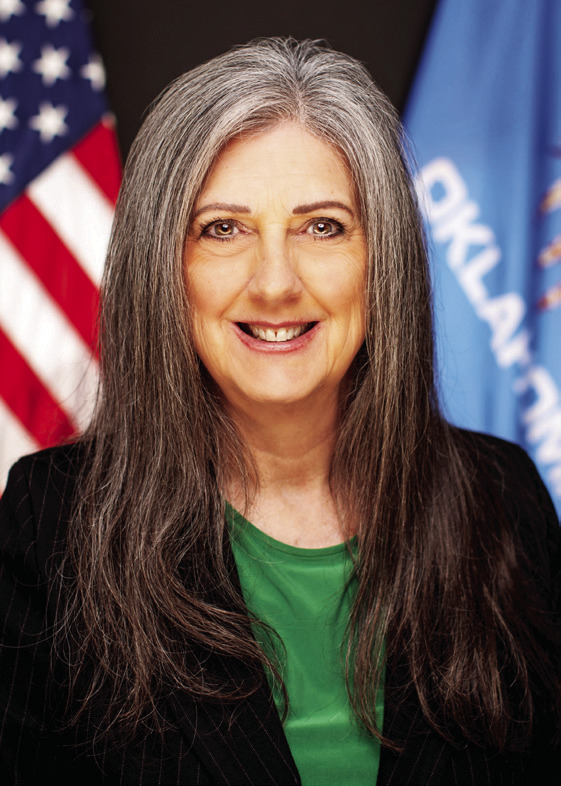
Rep. Cynthia Roe, a Republican, represents House District 42 in the Oklahoma House of Representatives. Her district includes portions of Cleveland, Garvin and McClain counties.