OPINION/COLUMN
This week, I had the opportunity to represent Oklahoma at the National Conference of State Legislatures (NCSL), where lawmakers from across the country came together to discuss some of the most pressing public health issues facing our states. I serve as a voting member of the NCSL Health Policy Committee, and I appreciated the chance to participate in these important conversations alongside several of my colleagues from Oklahoma.
One of the topics we addressed was the ongoing health workforce shortage, which is hitting rural communities like ours across the country, especially hard. We discussed how community health centers, rural health clinics and federally qualified health centers (FQHCs) can help fill the gap, but also the challenges they face. This challenge is evident in our own communities, where providers at local FQHCs, including House District 42, work hard to meet growing needs despite limited staff and resources.
It is increasingly difficult to recruit physicians, nurses and other providers to rural areas, despite the urgent need. Our discussions at the conference reinforced the importance of federal and state policies that support providers in underserved communities.
We also voted on a policy directive focused on improving access to health care for veterans. While veteran health facilities provide essential services, many of them are located in metro areas and can be difficult to reach for veterans in rural Oklahoma.
Scheduling timely appointments can also be a challenge. We believe veterans should have more flexibility to access health care outside of the VA system when needed, especially when distance or delays stand in the way of timely care.
Another area of focus was pharmacy benefit managers (PBMs), which are large corporations that manage prescription drug benefits on behalf of health insurers. These middlemen are often based out of state and have grown into multi- billion dollar businesses with significant influence over drug pricing.
Legislators across the country are beginning to recognize the need for stronger state oversight to protect patients, pharmacists and public health dollars. I was glad to join in support of a resolution calling for increased state regulation of PBMs, which will be sent to Congress for consideration.
Outside of committee meetings, I attended sessions on Medicaid and how states are bracing for budget impacts as the federal government reduces its funding match. Every state will face tough decisions, and Oklahoma is no exception. These conversations reminded me how critical it is to keep our state budget sustainable while continuing to serve the people who depend on these programs.
I also had the privilege of participating in a women‘s legislative roundtable where we discussed a range of issues affecting women and families. At my table, we focused on maternal mental health and maternal mortality. We shared ideas and strategies for improving care, reducing stigma, and strengthening support for mothers before, during and after pregnancy. According to the CDC, in 2023, the maternal mortality rate for Black women was 50.3 deaths per 100,000 live births, more than three times higher than the rate for White women (14.5), and significantly higher than Hispanic (12.4) and Asian (10.7) women. These numbers are deeply troubling, and they underscore the urgent need for better access to care and stronger support systems.
Conferences like NCSL give legislators a chance to learn from one another, exchange policy ideas and return home with new tools to better serve our communities.
I hope you‘re enjoying these final days of summer as students prepare to head back to school. Please know that I keep you in my prayers each day.
Feel free to reach out with any questions or concerns. My email address is cynthia.roe@okhouse.gov, or you can call my office at 405-557-7365.
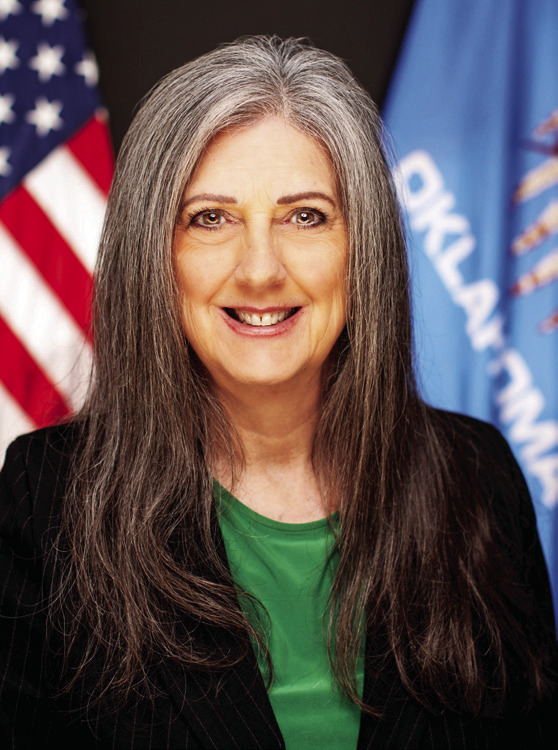
Rep. Cynthia Roe, a Republican, represents House District 42 in the Oklahoma House of Representatives. Her district includes portions of Cleveland, Garvin and McClain counties.