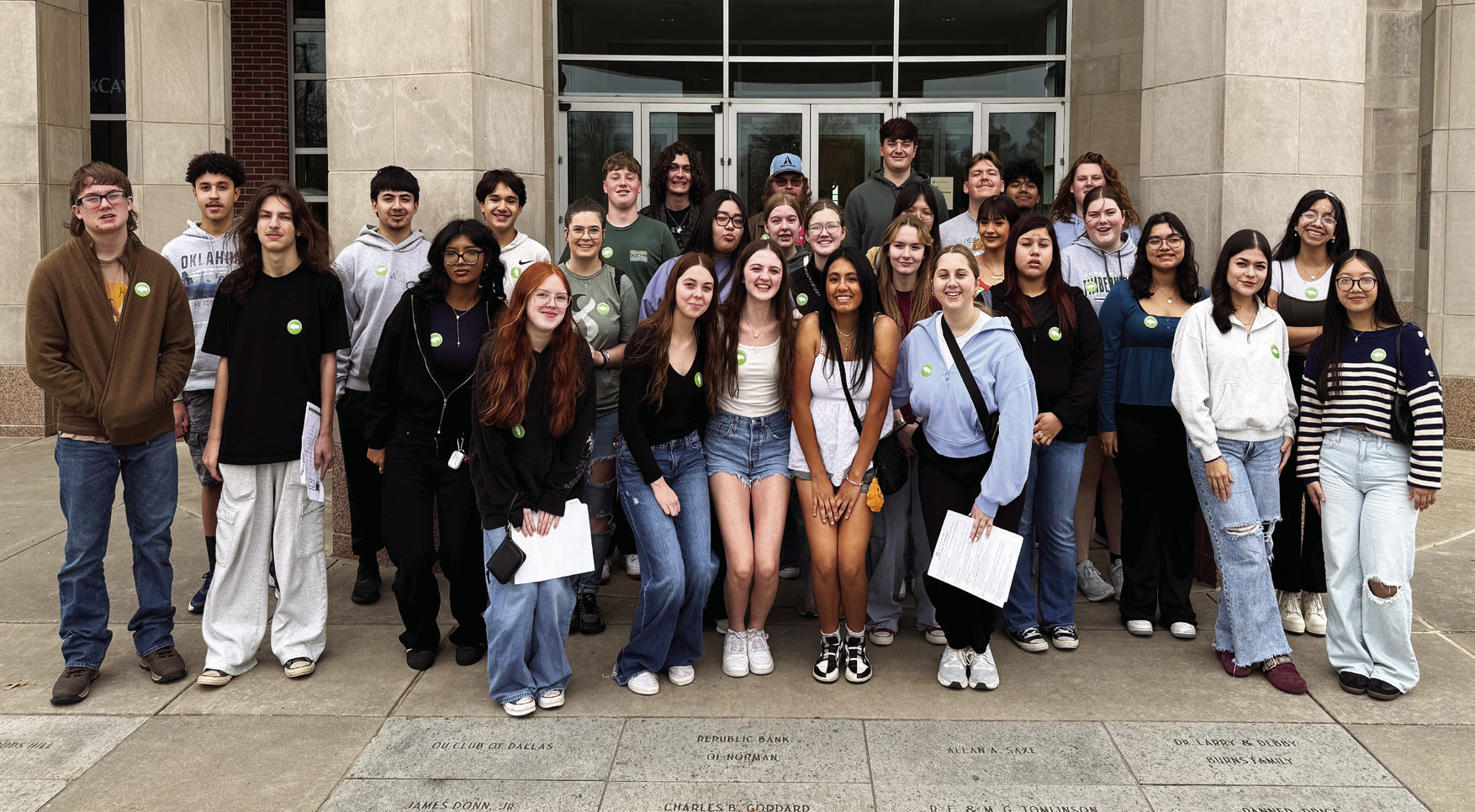
Pauls Valley High School chemistry is moving out of the periodic table and into the water. Thanks to a grant from the Pauls Valley Foundation for Academic Excellence, students in Mark Green’s chemistry classes recently traded their desks for a day as investigative researchers at the Sam Noble Museum of Natural History.
The project, titled “AquaChem,” was designed to bridge the gap between classroom theory and real-world environmental stakes. While most students learn about pH levels and dissolved oxygen from a textbook, this grant allowed students to analyze authentic samples using professional- grade scientific equipment. The twohour intensive lab moved beyond simple formulas. Using actual case studies from the Oklahoma Department of Wildlife, students used a combination of geographic data, witness interviews and fresh-water test results to determine what—or who— was responsible for environmental stress in local ecosystems.
The trip also took students through the museum’s Hall of Natural Wonders, where they compared the riffles of fast-flowing upland streams to the deep pools of Oklahoma’s rivers. They were tasked with a difficult question: If a chemical spill occurred today, which species have the adaptations to survive, and which would be lost?
By connecting chemistry to biology and history, the Pauls Valley Foundation for Academic Excellence is helping students see the “big picture” of science. This handson experience didn't just teach them about molecules—it taught them how to protect their own backyard.