OPINION/COLUMN
As the new year approaches, lawmakers are already preparing for the 2026 legislative session. The Second Regular Session of the 60th Legislature will convene Feb. 2, 2026. While that date may seem far off, much of the work that shapes the session begins months in advance.
Members of the House and Senate are preparing this month to begin to meet with state agencies as they present their budget requests for the coming fiscal year. These requests serve as the starting point for our work on the state budget. The budget process, however, continues well into the spring and typically runs through May before final decisions are made.
Though we will hear some of the state agencies this month, the largest agencies, often referred to as the “big six,” will present their budgets in January, closer to the start of session. These include the State Department of Education, the Office of Management and Enterprise Services, Regents for Higher Education, the Department of Transportation, the Department of Human Services and the Health Care Authority.
These budget hearings help lawmakers understand agency needs, challenges and priorities before we begin making funding decisions.
Two other important dates are also on the calendar and are key to understanding the bill process. The first deadline passed Dec. 5, marking the cutoff for submitting ideas for the drafting of House bills and joint resolutions.
This is the deadline where members had to provide their proposals to House staff so those ideas can be turned into properly written legislation.
The second noteworthy deadline is Jan. 15, and this is the deadline for filing bills and joint resolutions. Any bill that lawmakers want considered during the upcoming session must be officially filed by that date.
During every session, House members are limited to eight bills, often called a member‘s ‚top eight‘, that they can move through the full legislative process, with some limited exceptions. One exception that is unique to the Second Regular Session is known as the carry-over exception.
Carry-over bills are those that were among a member’s top eight bills during the First Regular Session but did not pass or receive final action before the session ended. These bills remain in the same position in the process where they stalled and can be considered again during the Second Regular Session.
If a member wants to move forward with a carry-over bill, the process depends on where that bill currently sits. If the bill is still in committee, the member must request a hearing from the committee chair. If the bill has already advanced out of committee, then a request is made to the Majority Floor Leader’s office for a floor hearing.
Only bills that were in a member’s top eight at the end of the First Regular Session are eligible to be carried over, and only by the member who was the principal author at that time. If a carry-over bill is transferred to a different member, that member must place it into their own top eight for the Second Regular Session.
As for me, I am currently working on several bills and continuing conversations with constituents, stakeholders and community leaders as those ideas take shape. The weeks ahead are critical for refining proposals and making sure they are ready for the formal process.
As we transition from the interim to the Second Session, please remember that I am here to listen, and it is important to me that you know my office is ready to help.
My email address is cynthia.roe@okhouse.gov, or you can call my office at (405) 557-7365.
I hope everyone had a nice Thanksgiving and enjoyed time with family and loved ones. I pray for each of you daily and I am thankful that I get to represent our great district!
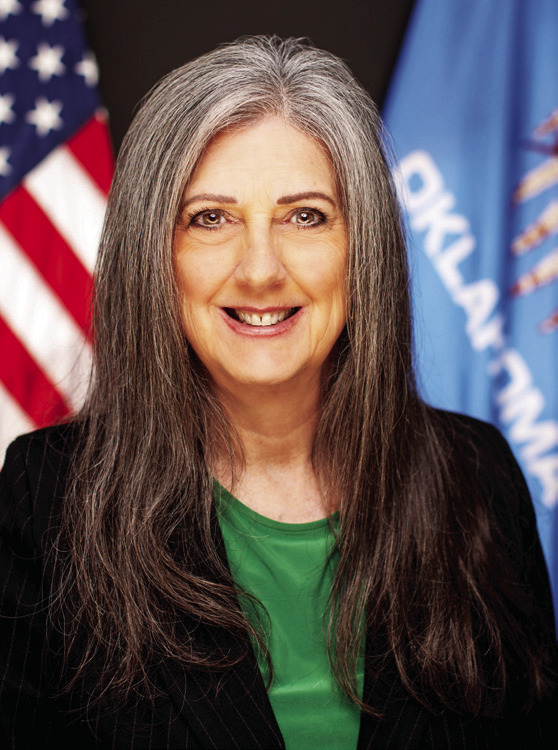
Rep. Cynthia Roe, a Republican, represents House District 42 in the Oklahoma House of Representatives.
Her district includes portions of Cleveland, Garvin and McClain counties.